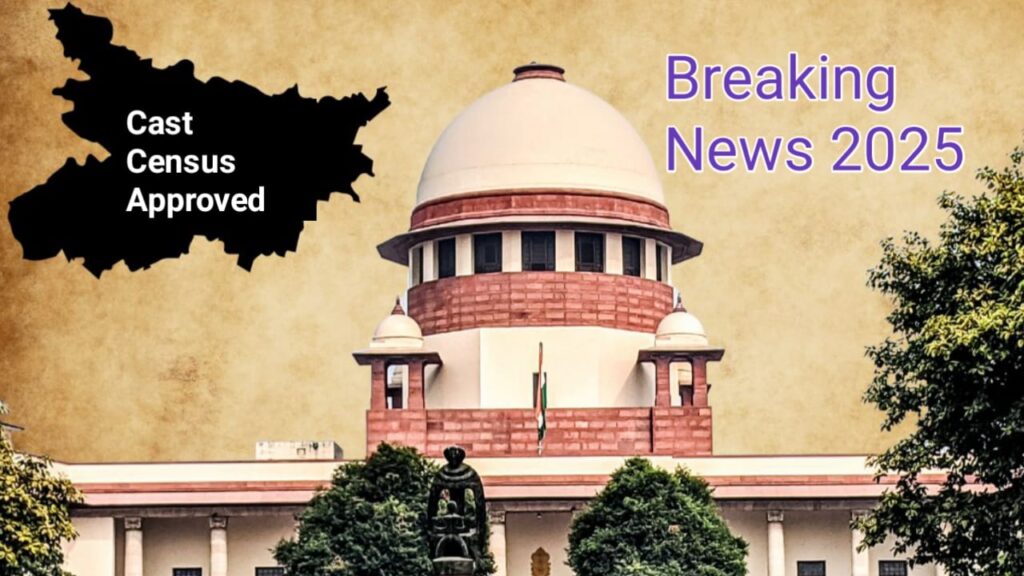
A New Decision Made: Caste Census Approved by the Central Government
This year, elections are due in Bihar, and the Central Government has made a major decision. After years of resistance to a nationwide caste census, the government has finally approved it. This marks a significant policy shift and has sparked a lot of discussion.
What is a Caste Census?
A census is conducted every 10 years in India to gather population data. The last one was in 2011. The 2021 census was delayed due to the COVID-19 pandemic and is now likely to be merged with the 2031 census.
A caste census collects demographic and socio-economic data about various castes across the country, such as their population size, education level, and economic conditions.
Why Does This Matter?
The last officially published caste data in India was from 1931, during British rule. After independence, only data on Scheduled Castes (SC) and Scheduled Tribes (ST) were collected—excluding data on other castes. The government feared that releasing such data could lead to social unrest and politicization.
Though a Socio-Economic and Caste Census (SECC) was conducted in 2011, only the household data was released—not the caste data, which was considered unreliable and confusing.
What Changed the Government’s Stance?
Until recently, the ruling party (BJP) opposed a broader caste census beyond SC/ST, arguing it could divide society. However, growing political pressure, especially from opposition parties and regional governments like Bihar’s, led to a change.
Two key factors likely influenced the decision:
- Legal Precedent: Bihar’s state-level caste survey was completed and published.
2. Political Strategy: With upcoming elections, mobilizing OBC (Other Backward Class) votes is critical.
Political Reactions
The BJP now argues that the caste census is necessary to address opposition demands and enhance OBC empowerment. Rahul Gandhi and opposition leaders have hailed this as a victory, claiming the government has adopted their vision.
Gandhi has emphasized proportional representation—“jitni abaadi, utna haq” (the share of power should match the population size).
Why is Caste Data Important?
- Better Policy Making: With accurate caste data, the government can design targeted welfare, education, and job programs.
- Equity Within OBCs: Some castes within OBCs are more advanced than others. Accurate data helps in fair distribution of benefits.
- Update Old Data: Current policies still rely on the 1931 data, which is outdated and unreliable.
Challenges in Conducting a Caste Census
- Technical Difficulties: India’s diversity means even within a small area, numerous caste names exist—many unfamiliar and hard to categorize.
- Standardization Issues: Enumerators will need proper training and standardized digital tools to collect accurate data.
- Social Sensitivities: The census could raise caste-based tensions or backlash from dominant castes feeling threatened.
- Administrative Load: With a population exceeding 1.4 billion, the logistical effort is immense—training staff, revising questionnaires, and cleaning complex data.
Legal and Constitutional Perspective
The Constitution mandates the collection of SC/ST data in every census, but it does not require caste enumeration for other groups. That decision lies with the government, which has now opted to proceed.
Future Implications
- Reservation Debate: The release of caste data may reignite debates about quotas and demand for increased reservations.
- Quota Cap Review: The current 50% reservation limit, set by the Supreme Court in the Indra Sawhney case, might be challenged using new data as justification.
Final Summary
The caste census is a complex, sensitive, and highly impactful process. While it could lead to more equitable policymaking, it also brings political and social challenges. As the country prepares for this, the real test will be in its execution and the way data is used.